Buy produktiv.eu ?
We are moving the project
produktiv.eu .
Are you interested in purchasing the domain
produktiv.eu ?
domain@kv-gmbh.de · 0541-91531010
Buy produktiv.eu ?
Why is a direct current motor more energy efficient than an alternating current motor?
A direct current (DC) motor is more energy efficient than an alternating current (AC) motor because it does not experience energy losses due to the changing direction of the current. In an AC motor, the current changes direction multiple times per second, leading to energy losses through hysteresis and eddy currents in the motor's iron core. In contrast, a DC motor maintains a constant direction of current flow, resulting in fewer energy losses and higher efficiency. Additionally, DC motors can more easily be controlled for speed and torque, further contributing to their energy efficiency. **
Should a clamp ammeter only measure the effective current?
No, a clamp ammeter should not only measure the effective current. It should also be able to measure the peak current, as well as the average current. This is important because different applications may require different types of current measurements. For example, in some cases, it may be important to know the peak current to ensure that a circuit can handle the maximum load, while in other cases, the average current may be more relevant for determining power consumption. Therefore, a clamp ammeter should be able to measure all types of current to be versatile and useful in various situations. **


Similar search terms for Current
Top-Angebote
Products related to Current:
-
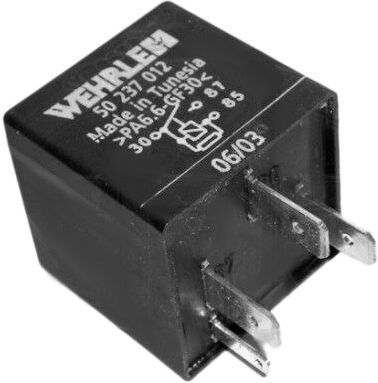
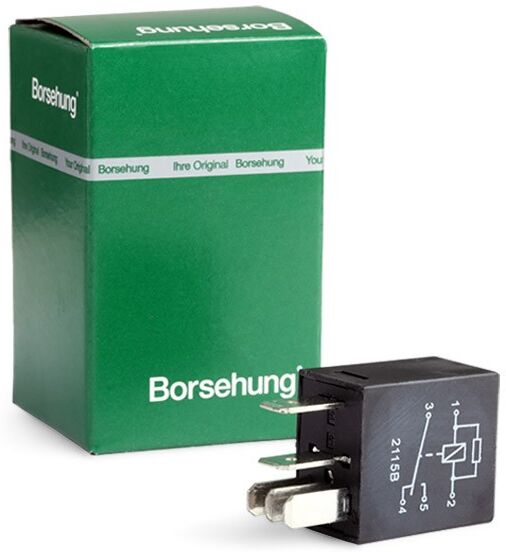
Borsehung B17804 Relay, main currentConstruction Year from: 12/1997, 12/1996, 11/1998, 10/1998, 02/1999, 05/2000, 07/1999, 03/1999, 11/1999, 08/1999, 09/1999, 12/1999, 01/2000, 04/1999, 10/1999, 05/1999, 04/2000, 11/2004, 06/1999, 02/2000, 07/2000, 01/2001, 08/2001, 06/2000, 09/2000, 07/2001, 12/2000, 11/2000, 02/2001, 03/2001, 10/2000, 12/2001, 01/2002, 06/2002, 09/2001, 04/2002, 03/2002, 09/2002, 11/2002, 08/2003, 05/2004, 06/2003, 04/2004, 01/2003, 11/2001, 10/2005, 02/2002, 10/2001, 02/2006, 09/2005, 05/2001, 01/1999, 04/1968, 07/19605,59 £*Shipping: 8,45 £Secure redirect to the provider



-
What is the difference between the effective value of half-wave current and the direct current component?
The effective value of half-wave current is the root mean square (RMS) value of the current in a half-wave rectified circuit, which is the equivalent value of the current that would produce the same amount of power dissipation in a resistive load. On the other hand, the direct current component is the average value of the current in a half-wave rectified circuit, which represents the steady-state current flow in one direction. The difference between the two is that the effective value takes into account the fluctuating nature of the current waveform, while the direct current component only considers the average value of the current. **
-
Is lightning direct current, alternating current, or three-phase current?
Lightning is a form of electrical discharge that occurs in the atmosphere, and it is best described as a form of alternating current. This is because lightning is characterized by rapid fluctuations in the direction of the electrical current, as it moves back and forth between the clouds and the ground. This alternating current is what causes the characteristic flickering and flashing of lightning bolts. **
-
What type of current is it, alternating current or direct current?
The type of current being referred to would depend on the specific context or application. Alternating current (AC) is commonly used in household electrical systems and is characterized by its periodic reversal of direction. On the other hand, direct current (DC) flows in one direction and is often used in electronics and battery-powered devices. Therefore, the type of current being discussed would depend on the specific electrical system or device in question. **
-
Instead of three-phase current, alternating current?
Alternating current (AC) is preferred over three-phase current in many applications because it is more commonly available and easier to distribute. AC can be easily converted to different voltage levels using transformers, making it versatile for various electrical systems. Additionally, AC is safer for use in residential and commercial buildings due to its ability to be easily controlled and regulated. Overall, AC is a more practical and efficient choice for most electrical power systems compared to three-phase current. **

Can alternating current be converted to direct current?
Yes, alternating current (AC) can be converted to direct current (DC) using a device called a rectifier. A rectifier is an electrical device that converts AC to DC by allowing current to flow in only one direction. This conversion is commonly used in power supplies for electronic devices and in many other applications where DC power is required. **
Do batteries provide direct current or alternating current?
Batteries provide direct current (DC). This means that the flow of electric charge is always in one direction, from the positive terminal to the negative terminal. In contrast, alternating current (AC) changes direction periodically, typically 50 or 60 times per second in household electrical systems. Therefore, batteries are a source of DC power, which is commonly used in portable electronic devices and automotive systems. **
Top-Angebote
Products related to Current:
-
Current Softflex Dark Blue Grill Cover For Current Model G and Model G 2.0Protect your investment with the Ocean Colored Current Softflex Cover. It is lightweight yet built to withstand the elements and custom sized to fit your Current grill or griddle. Machine washable, and made to last and stylish.99,99 $*Shipping: 0,00 $Secure redirect to the provider
-
AIC 54727 Relay, main currentOperating Mode: Electric; Number of pins: 5; Switch Function: Normally Open Contact, Dual Output; Voltage [V]: 12; Inductive Load [A]: 30; Capacitive Load [A]: 30; Ohmic Load [A]: 40; Supplementary Article / Supplementary Info: with holder; Guarantee: 5 years guarantee or up to 75,000km4,99 £*Shipping: 8,45 £Secure redirect to the provider
-
Why is a direct current motor more energy efficient than an alternating current motor?
A direct current (DC) motor is more energy efficient than an alternating current (AC) motor because it does not experience energy losses due to the changing direction of the current. In an AC motor, the current changes direction multiple times per second, leading to energy losses through hysteresis and eddy currents in the motor's iron core. In contrast, a DC motor maintains a constant direction of current flow, resulting in fewer energy losses and higher efficiency. Additionally, DC motors can more easily be controlled for speed and torque, further contributing to their energy efficiency. **
-
Should a clamp ammeter only measure the effective current?
No, a clamp ammeter should not only measure the effective current. It should also be able to measure the peak current, as well as the average current. This is important because different applications may require different types of current measurements. For example, in some cases, it may be important to know the peak current to ensure that a circuit can handle the maximum load, while in other cases, the average current may be more relevant for determining power consumption. Therefore, a clamp ammeter should be able to measure all types of current to be versatile and useful in various situations. **
-
What is the difference between the effective value of half-wave current and the direct current component?
The effective value of half-wave current is the root mean square (RMS) value of the current in a half-wave rectified circuit, which is the equivalent value of the current that would produce the same amount of power dissipation in a resistive load. On the other hand, the direct current component is the average value of the current in a half-wave rectified circuit, which represents the steady-state current flow in one direction. The difference between the two is that the effective value takes into account the fluctuating nature of the current waveform, while the direct current component only considers the average value of the current. **
-
Is lightning direct current, alternating current, or three-phase current?
Lightning is a form of electrical discharge that occurs in the atmosphere, and it is best described as a form of alternating current. This is because lightning is characterized by rapid fluctuations in the direction of the electrical current, as it moves back and forth between the clouds and the ground. This alternating current is what causes the characteristic flickering and flashing of lightning bolts. **
Similar search terms for Current
-
Borsehung B17804 Relay, main currentConstruction Year from: 12/1997, 12/1996, 11/1998, 10/1998, 02/1999, 05/2000, 07/1999, 03/1999, 11/1999, 08/1999, 09/1999, 12/1999, 01/2000, 04/1999, 10/1999, 05/1999, 04/2000, 11/2004, 06/1999, 02/2000, 07/2000, 01/2001, 08/2001, 06/2000, 09/2000, 07/2001, 12/2000, 11/2000, 02/2001, 03/2001, 10/2000, 12/2001, 01/2002, 06/2002, 09/2001, 04/2002, 03/2002, 09/2002, 11/2002, 08/2003, 05/2004, 06/2003, 04/2004, 01/2003, 11/2001, 10/2005, 02/2002, 10/2001, 02/2006, 09/2005, 05/2001, 01/1999, 04/1968, 07/19605,59 £*Shipping: 8,45 £Secure redirect to the provider
-
Borsehung B17806 Relay, main currentConstruction Year from: 01/2009, 11/1995, 03/2006, 01/1997, 06/2010, 11/1996, 05/2010, 10/1997, 09/1997, 08/1997, 03/2012, 08/2010, 02/2011, 02/2009, 08/2008, 04/2011, 09/2008, 09/1998, 08/1998, 05/2000, 03/2000, 10/1999, 06/2001, 04/2000, 01/2001, 02/2001, 04/2002, 06/2002, 02/2002, 09/2002, 08/2002, 05/2001, 12/2002, 10/2002, 01/2003, 09/2003, 05/2003, 03/2003, 08/2003, 04/2004, 05/2004, 07/2003, 01/2004, 03/2004, 10/2003, 12/2003, 02/2004, 02/2003, 07/2004, 08/2004, 09/2004, 06/2004, 01/2005, 03/2005, 05/2005, 11/2004, 02/2005, 08/2005, 07/2005, 11/2005, 10/2004, 01/2006, 12/2005, 04/2005, 10/2005, 09/2005, 09/2006, 06/2006, 10/2006, 05/2006, 11/2006, 12/2006, 08/2006, 07/2006, 06/2007, 07/2007, 01/2007, 02/2006, 11/2007, 10/2007, 05/2007, 09/2007, 04/2007, 08/2007, 01/2008, 02/2008, 05/2008, 04/2006, 12/2008, 02/2007, 11/2008, 10/2008, 07/2008, 04/2009, 07/2009, 09/2009, 12/2009, 11/2009, 03/2010, 08/2009, 01/2010, 02/2010, 04/2008, 07/20105,29 £*Shipping: 8,45 £Secure redirect to the provider
-
Borsehung B17818 Relay, main currentRelay function: Pre-glow device, X contact relief; Rated Voltage [V]: 12; Number of connectors: 4; Current Strength [A]: 70; Relay Number: 644; Construction Year from: 01/2006, 03/2010, 05/2010, 02/2010, 05/2002, 11/2002, 12/2002, 07/2003, 03/2003, 02/2003, 01/2004, 03/2004, 10/2003, 12/2003, 11/2003, 05/2004, 06/2004, 02/2004, 04/2004, 11/2004, 07/2004, 03/2005, 10/2004, 05/2005, 09/2004, 11/2005, 10/2005, 09/2005, 08/2005, 07/2005, 07/2006, 04/2006, 08/2006, 12/2005, 05/2006, 03/2006, 06/2006, 02/2005, 11/2006, 06/2005, 08/2007, 07/2007, 02/2007, 09/2007, 06/2007, 12/2007, 11/2007, 03/2008, 02/2006, 09/2008, 12/2006, 08/2008, 07/2009, 10/2009, 01/2010, 08/2009, 11/2009, 01/2008, 02/2008, 09/20097,99 £*Shipping: 8,45 £Secure redirect to the provider
-
What type of current is it, alternating current or direct current?
The type of current being referred to would depend on the specific context or application. Alternating current (AC) is commonly used in household electrical systems and is characterized by its periodic reversal of direction. On the other hand, direct current (DC) flows in one direction and is often used in electronics and battery-powered devices. Therefore, the type of current being discussed would depend on the specific electrical system or device in question. **
-
Instead of three-phase current, alternating current?
Alternating current (AC) is preferred over three-phase current in many applications because it is more commonly available and easier to distribute. AC can be easily converted to different voltage levels using transformers, making it versatile for various electrical systems. Additionally, AC is safer for use in residential and commercial buildings due to its ability to be easily controlled and regulated. Overall, AC is a more practical and efficient choice for most electrical power systems compared to three-phase current. **
-
Can alternating current be converted to direct current?
Yes, alternating current (AC) can be converted to direct current (DC) using a device called a rectifier. A rectifier is an electrical device that converts AC to DC by allowing current to flow in only one direction. This conversion is commonly used in power supplies for electronic devices and in many other applications where DC power is required. **
-
Do batteries provide direct current or alternating current?
Batteries provide direct current (DC). This means that the flow of electric charge is always in one direction, from the positive terminal to the negative terminal. In contrast, alternating current (AC) changes direction periodically, typically 50 or 60 times per second in household electrical systems. Therefore, batteries are a source of DC power, which is commonly used in portable electronic devices and automotive systems. **
* All prices are inclusive of VAT and, if applicable, plus shipping costs. The offer information is based on the details provided by the respective shop and is updated through automated processes. Real-time updates do not occur, so deviations can occur in individual cases. ** Note: Parts of this content were created by AI.